Analytics-Powered Loyalty Initiatives Promoting Responsible Engagement in Online Gaming
Zara Butler · Aug 16, 2026

Analytics-Powered Loyalty Initiatives Promoting Responsible Engagement in Online Gaming
Modern gaming platforms now combine player behavior datasets with loyalty structures to create systems that reward consistent participation while embedding safeguards against excessive play, and this shift draws on aggregated analytics from multiple jurisdictions. Platforms track metrics such as session length, wager frequency, and deposit patterns to adjust reward tiers, which allows operators to deliver personalized incentives that align with observed activity levels rather than uniform promotions.
Core Components of Data-Backed Responsibility Models
Responsibility frameworks rely on machine learning algorithms that process real-time telemetry from digital reels and table games, then flag deviations from established baselines for individual accounts. When patterns indicate rising risk, the system can automatically modify loyalty point accrual rates or insert cooling-off prompts before bonus offers activate. Researchers at institutions including the University of Nevada Las Vegas have documented how these interventions maintain engagement metrics while reducing the incidence of extended sessions beyond self-imposed thresholds.
Operators integrate these tools with existing player accounts through centralized databases that comply with standards set by bodies such as the Malta Gaming Authority, which requires transparent data handling for all loyalty calculations. The approach differs from older point systems because rewards now scale according to both volume and behavioral stability, so steady moderate play receives equivalent or greater recognition than sporadic high-volume activity.
Implementation Across Platforms in 2025-2026
Throughout 2025 several major operators rolled out updated loyalty modules that incorporate responsibility scoring, and by August 2026 multiple jurisdictions reported measurable adoption rates above 60 percent among licensed platforms. These updates link cumulative win distributions directly to reward eligibility, which means players receive tier upgrades only after demonstrating consistent patterns that include voluntary limit setting. Aggregated reel data streams feed into these models, enabling operators to map interconnected prize networks without exposing individual identities.
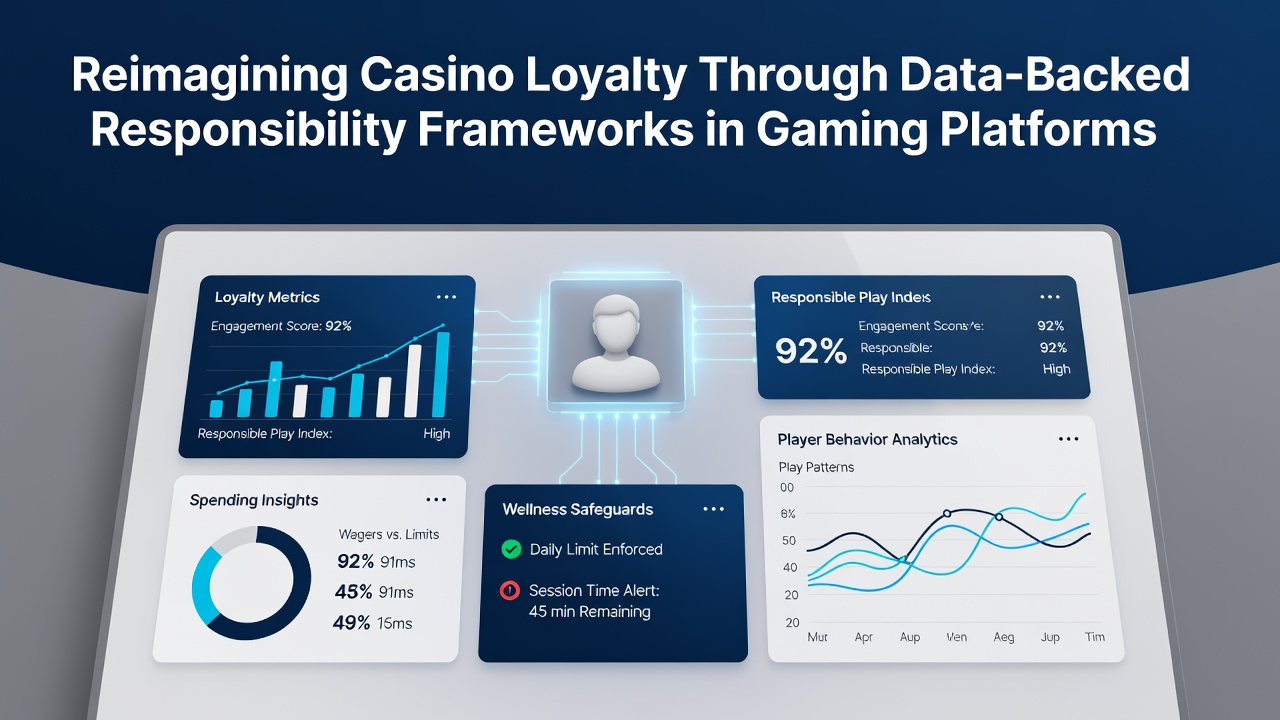
Canadian provincial regulators, including those in Ontario, have reviewed similar frameworks and noted that data-driven adjustments to loyalty multipliers correlate with lower rates of account reactivation after self-exclusion periods. In parallel, Australian research coordinated through the Australian Institute of Family Studies shows that platforms using variance-adjusted reward structures report higher retention among players who set deposit caps early in their engagement cycle. These findings emerge from longitudinal platform analytics rather than anecdotal reports, providing operators with quantifiable benchmarks for program refinement.
Technical Integration and Regulatory Alignment
Backend systems now connect loyalty engines to external verification services that cross-reference self-exclusion registries across state lines, and this linkage prevents reward offers from reaching restricted accounts even when players attempt multiple registrations. Data pipelines also feed into quarterly compliance reports submitted to oversight agencies, which ensures that responsibility metrics remain auditable. Observers note that such integration reduces administrative overhead because automated flags replace manual reviews in most routine cases.
One documented implementation involved a platform that recalibrated its loyalty currency based on session variance profiles, resulting in point bonuses that favored lower-volatility play sequences. According to aggregated reports from the National Council on Problem Gambling, similar adjustments contributed to a documented drop in high-frequency deposit alerts across participating sites during the first half of 2026.
Conclusion
Platform operators continue to refine these loyalty models by incorporating additional variables such as cross-game participation and time-of-day preferences, which further aligns reward distribution with responsible engagement parameters. The ongoing evolution depends on sustained data quality and regulatory cooperation across regions, allowing frameworks to adapt as new behavioral indicators surface from expanded analytics.