Capital Allocation Frameworks Tailored to Fluctuation Profiles in Automated Gaming Devices
Parker Vogel · May 24, 2026

Capital Allocation Frameworks Tailored to Fluctuation Profiles in Automated Gaming Devices
Automated gaming devices such as video slots, electronic table games, and video lottery terminals operate under distinct mathematical structures that produce measurable payout fluctuations over time, and capital allocation frameworks provide structured methods for operators to assign financial resources based on those patterns. These frameworks integrate data on hit frequency, return-to-player percentages, adn volatility indexes to determine reserve levels, machine density, and reinvestment cycles while maintaining compliance with jurisdictional requirements.
Research from industry monitoring programs shows that devices with high fluctuation profiles demand larger liquidity buffers because extended dry spells between payouts can strain daily cash positions, whereas low-volatility units allow tighter capital cycles since frequent small returns stabilize revenue streams. Observers note that casinos in regulated markets apply tiered allocation models which segment floor plans into zones where capital commitments match the statistical behavior of each device cluster.
Defining Fluctuation Profiles Through Quantitative Metrics
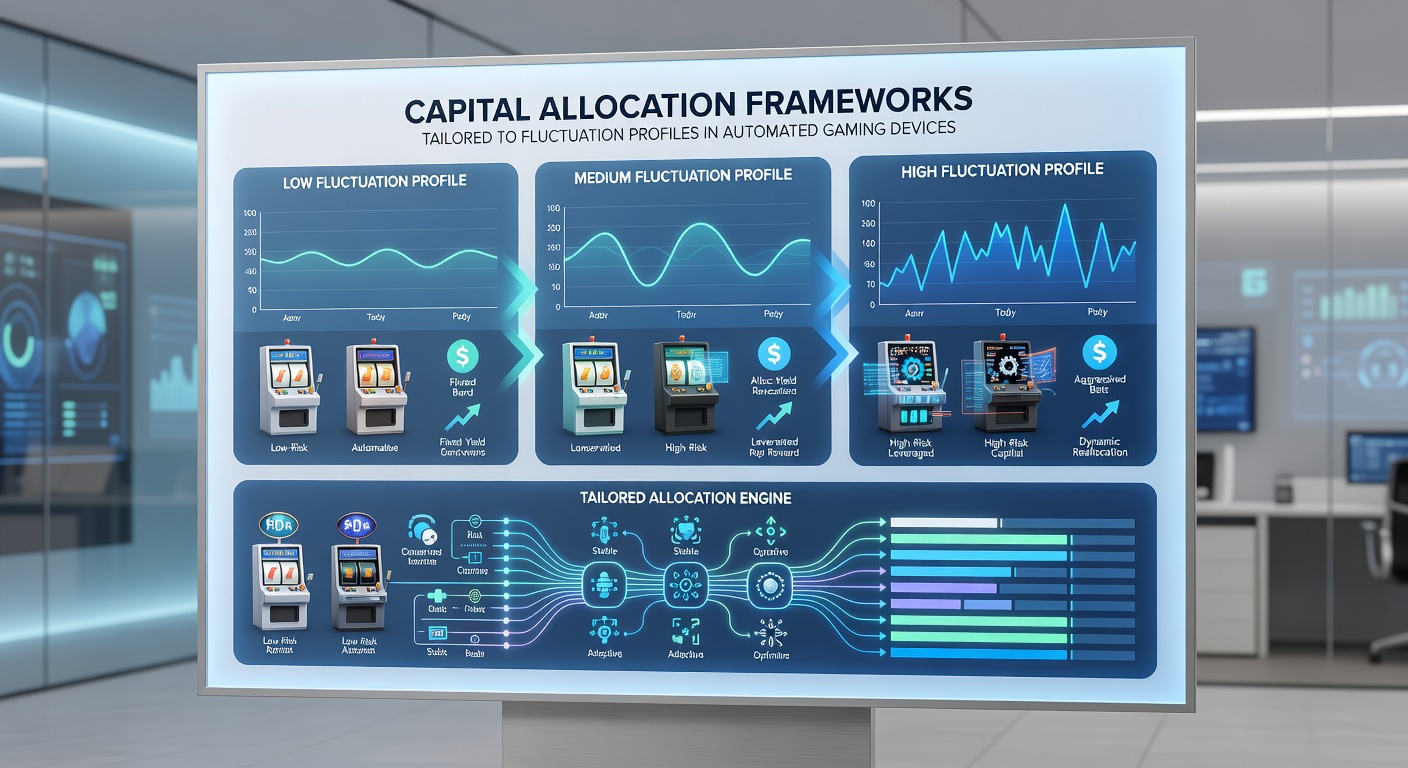
Fluctuation profiles emerge from the combination of standard deviation in payout distributions, game cycle length, and bonus trigger probabilities, and analysts calculate these values using simulation runs that model millions of spins to establish confidence intervals around expected returns. Data collected by gaming laboratories indicates that devices classified as high-volatility exhibit standard deviations exceeding 150 percent of the mean return, while medium-volatility units fall between 80 and 120 percent, and low-volatility games remain below 60 percent.
These classifications guide how much working capital operators must hold against each machine because variance directly influences the probability of negative daily results, and frameworks incorporate moving averages of actual performance to adjust allocations quarterly. Regulatory filings from multiple jurisdictions reveal that operators update these profiles whenever game software receives certification updates or when player preference data shifts the effective volatility through bonus feature engagement rates.
Core Elements of Tailored Capital Allocation Frameworks
A functional framework begins with a volatility-weighted reserve calculation that multiplies average daily coin-in by the device's standard deviation factor and then applies a safety multiplier derived from historical drawdown records. Operators further layer in constraints from cash-handling regulations and internal risk policies so that total exposure across all automated devices never exceeds predetermined percentages of overall gaming revenue.
Portfolio balancing techniques distribute capital across device categories to offset correlated fluctuations, and studies conducted by university gaming research centers demonstrate that mixing high-volatility and low-volatility units within the same bank reduces aggregate variance by up to 35 percent compared with uniform deployments. Software platforms now automate these reallocations by feeding real-time meter data into algorithms that rebalance reserve accounts overnight.
Implementation Practices Across Major Markets
North American casino groups have adopted dashboard systems that display live fluctuation scores alongside capital utilization rates, enabling floor managers to shift machines between high-limit and general areas when observed variance deviates from certified profiles. In European and Asian jurisdictions, similar tools incorporate local tax structures and progressive jackpot contributions into the allocation formulas because those elements alter net volatility for the operator.
One documented approach used by integrated resort operators involves creating dedicated volatility tranches where capital for high-fluctuation devices receives higher interest-rate assumptions in internal accounting models, reflecting the greater opportunity cost of tied-up funds. This method aligns reserve sizing with financing strategies and appears in annual reports submitted to securities regulators.
Regulatory Oversight and Reporting Requirements
Gaming control agencies require operators to maintain capital allocation policies that demonstrate solvency under stress scenarios based on each device's certified volatility index, and periodic audits compare actual reserves against modeled requirements. The Nevada Gaming Control Board publishes technical standards that specify minimum documentation for variance calculations, while the Australian Communications and Media Authority oversees similar disclosures for electronic gaming machines in licensed venues.
Those who've examined cross-border operations observe that frameworks must accommodate differing definitions of restricted cash, particularly when progressive contributions and player loyalty accruals affect available liquidity. Updated guidelines scheduled for release in May 2026 are expected to standardize volatility reporting formats across several North American and Oceania markets, which would streamline multi-jurisdictional compliance for large operators.
Technology Integration and Future Adjustments
Modern frameworks rely on application programming interfaces that pull meter data directly from gaming machines into enterprise resource planning systems, allowing daily recalibration of capital assignments without manual intervention. Machine learning models trained on historical payout sequences refine fluctuation estimates by identifying subtle pattern changes that traditional statistical methods overlook, and several suppliers now embed these analytics within the device firmware itself.
Operators who have implemented such systems report that automated adjustments reduce the frequency of emergency reserve transfers during peak volatility periods, although human oversight remains mandatory for any reallocation exceeding internal policy thresholds. Academic papers from gaming institutes continue to explore how emerging game mechanics, including skill-based elements and hybrid physical-digital interfaces, will influence future fluctuation profiles and therefore require updated allocation logic.
Conclusion
Capital allocation frameworks tailored to fluctuation profiles supply operators with systematic methods for matching financial resources to the statistical behavior of automated gaming devices, and continued refinement of these models depends on accurate volatility data, regulatory alignment, and integration with operational technology platforms. As certification standards evolve and new game types enter the market, the underlying mathematics of fluctuation measurement will determine how effectively capital remains protected while supporting revenue generation across diverse device portfolios.