Longitudinal Analytics Driving Stable Casino Engagement Ecosystems
Zara Butler · Aug 21, 2026
Longitudinal Analytics Driving Stable Casino Engagement Ecosystems
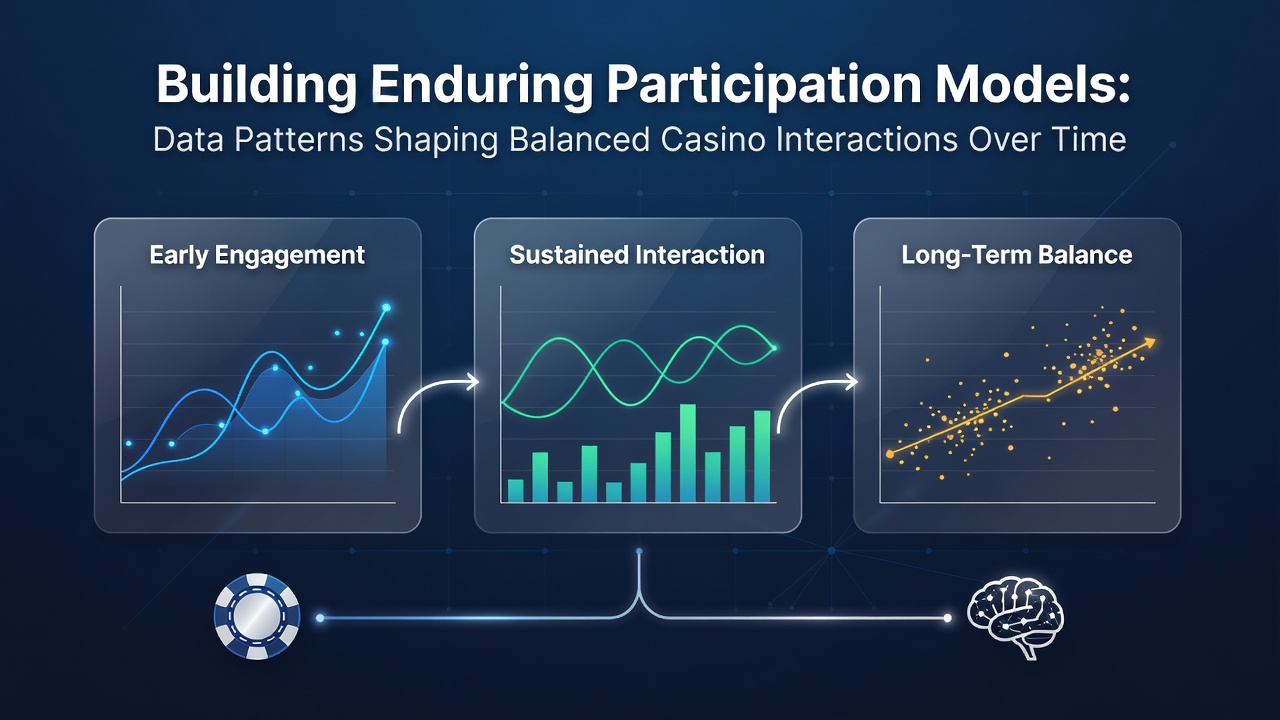
Platform operators have increasingly turned to multi-year datasets that track player behavior across thousands of sessions, revealing how participation levels stabilize when operators align game offerings with observed variance tolerances and session durations. These datasets compile reel spin outcomes, deposit patterns, and withdrawal frequencies from both land-based and digital environments, allowing analysts to identify recurring cycles that repeat across different market segments.
Core Data Elements in Participation Tracking
Studies from the Nevada Gaming Control Board show aggregated metrics on average session length, game type rotation, and frequency of play intervals form the foundation for models that predict sustained engagement without abrupt drop-offs. Researchers at institutions such as the University of Nevada, Reno have examined how these variables interact over 24-month windows, finding that players who encounter progressive jackpot linkages early in their activity tend to maintain consistent visit rates longer than those introduced to high-variance titles without prior segmentation.
Platform analytics further break down cross-session correlations, where time-of-day preferences combine with bet-size distributions to create profiles that operators use for targeted content rotation. When these profiles incorporate real-time feedback from loyalty program redemptions, the resulting adjustments produce smoother participation curves rather than the sharp peaks and valleys documented in earlier, less segmented approaches.
Regional Regulatory Influences on Data Application
August 2026 brought updated reporting requirements from the New Jersey Division of Gaming Enforcement that mandate quarterly submissions of player-retention statistics stratified by age cohort and game category. These filings have supplied external researchers with standardized fields that facilitate comparisons between Atlantic City properties and online platforms licensed in the same jurisdiction. Parallel requirements in Victoria, Australia, through the Victorian Commission for Gambling and Liquor Regulation, have produced complementary datasets that highlight seasonal fluctuations in participation tied to local economic indicators.
Operators in both regions now integrate these regulatory data streams with internal telemetry to refine thresholds for responsible play prompts. Evidence indicates that prompts triggered at individualized loss-limit milestones, rather than fixed monetary amounts, correlate with extended but controlled participation periods across demographic groups.

Network Effects in Prize Distribution
Interconnected prize pools spanning multiple sites generate cumulative win distributions that analysts track through anonymized transaction logs. Data aggregated by the Canadian Gaming Association reveals that linkage structures distributing smaller, more frequent payouts across networks maintain steadier participation volumes compared with structures concentrating value in rare large awards. Observers note that these patterns emerge consistently when datasets span at least 18 consecutive months, allowing seasonal noise to be isolated from underlying behavioral signals.
One documented case involved a multi-state progressive system where reconfiguration of contribution rates based on historical hit-frequency data produced measurable stabilization in daily active user counts. The adjustment relied on regression models that weighted prior participation density against projected jackpot growth curves, resulting in more predictable revenue streams for operators while preserving player interest over successive quarters.
Implementation Frameworks and Measurement
Successful deployment of these models requires iterative calibration cycles that compare predicted versus observed session continuation rates at weekly intervals. Teams at major operators employ A/B testing protocols on live traffic, holding constant variables such as marketing spend while varying only the sequencing of game recommendations derived from cluster analysis. Results from these controlled trials feed back into the central models, tightening confidence intervals around projected retention curves.
External validation comes from academic papers published in journals focused on decision sciences, where independent statisticians replicate operator findings using anonymized subsets released under data-sharing agreements. Such replication strengthens the reliability of parameters used for long-horizon forecasting, particularly when models incorporate macroeconomic covariates like regional employment rates that influence discretionary spending.
Conclusion
Collectively, the patterns extracted from extended datasets enable operators to construct participation frameworks that accommodate natural variation in player behavior while supporting operational stability. Regulatory filings scheduled for release in late 2026 and beyond will likely expand the granularity of available fields, further refining the precision of these models across jurisdictions. Continued cross-referencing between government statistics, industry associations, and academic replications will determine how effectively these approaches scale to emerging markets and new game formats.