Shifts in Player Decision Trees During Extended Digital Reel Sessions: Evidence from Platform Analytics
Leon Bennett · May 26, 2026
Shifts in Player Decision Trees During Extended Digital Reel Sessions: Evidence from Platform Analytics
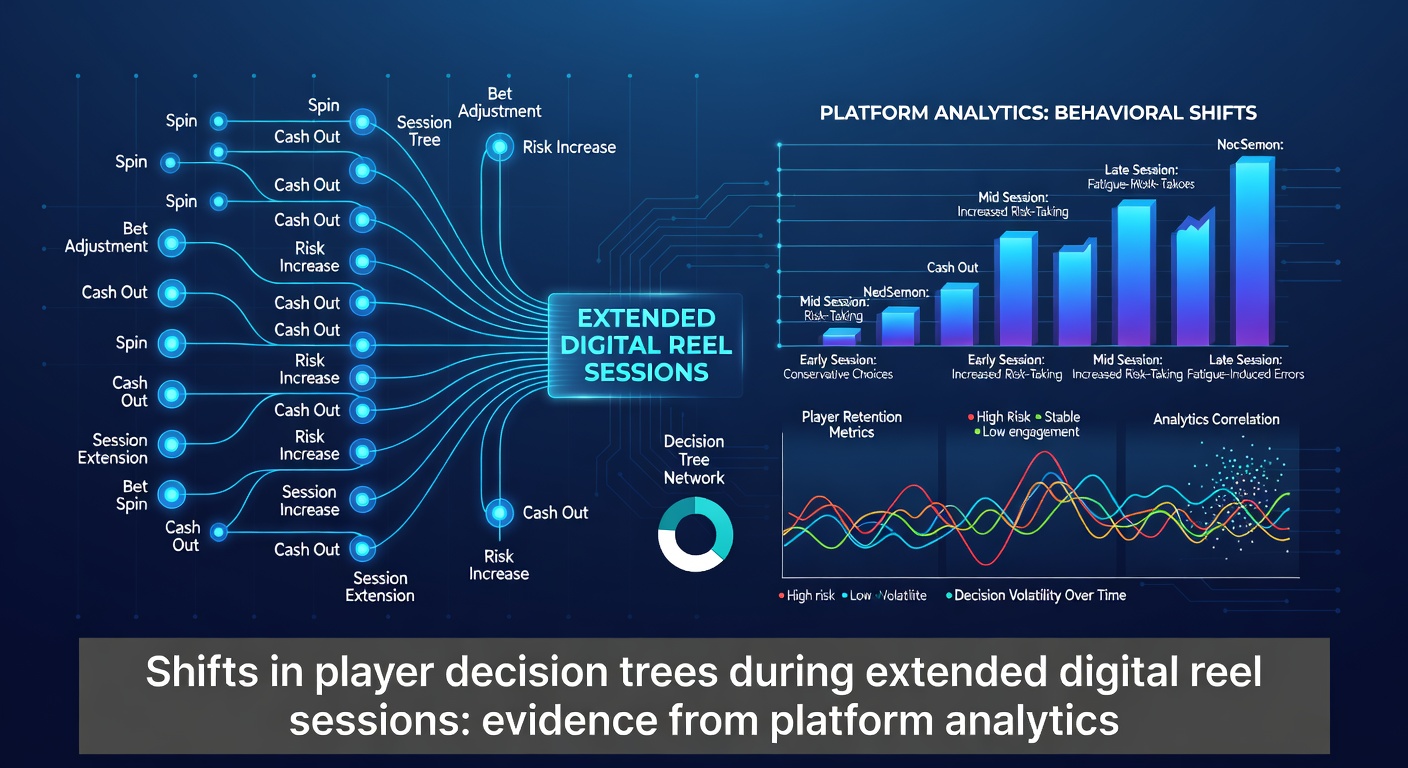
Platform analytics from major digital gaming operators reveal measurable changes in how players structure their choices across long sessions on reel-based games, and these patterns emerge consistently across multiple markets as of May 2026. Decision trees in this context refer to sequences of actions such as bet sizing, payline selection, game switching, and session termination points that players follow based on prior outcomes.
Core Patterns Identified in Extended Play
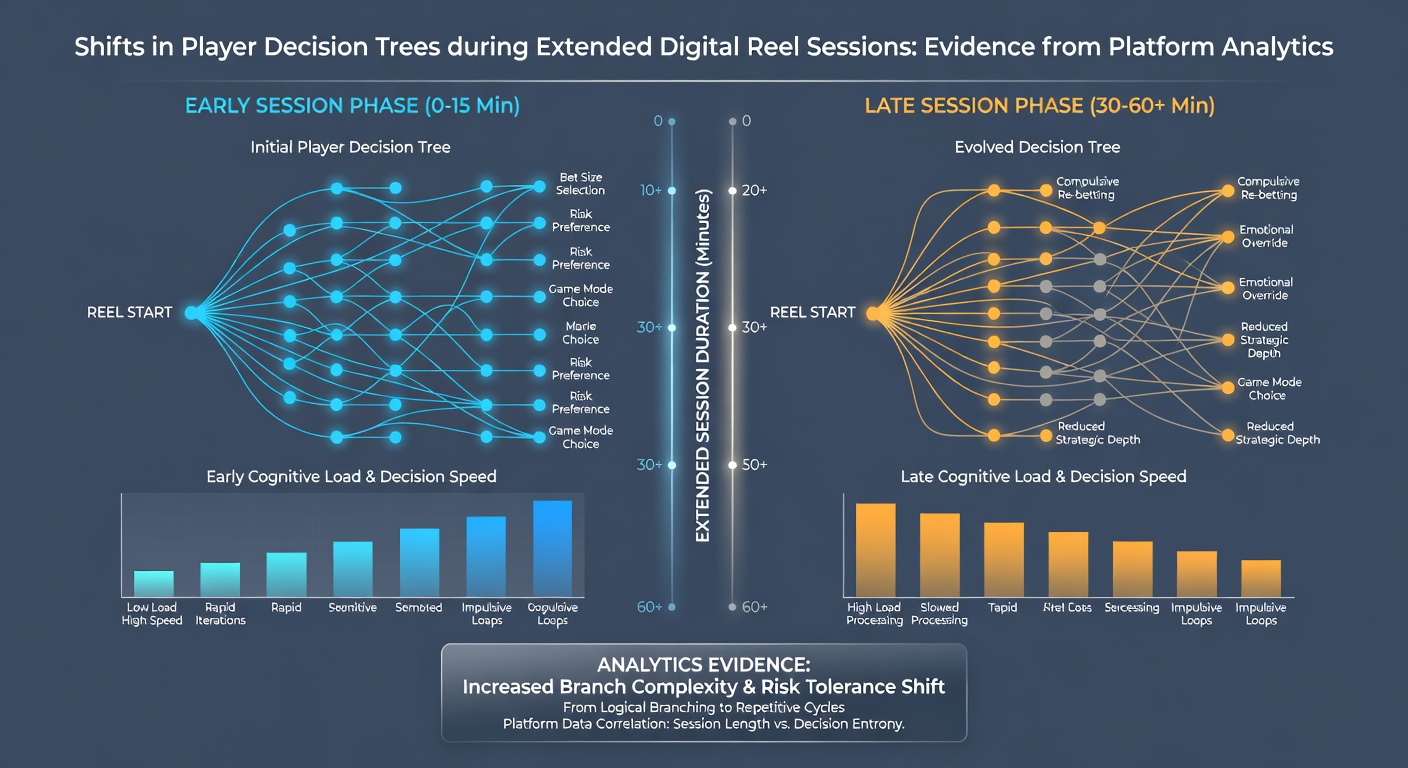
Data aggregated from thousands of sessions shows that players typically begin with conservative bet structures in the first 50 to 100 spins, yet after roughly 200 consecutive spins the frequency of bet increases rises by measurable margins according to internal platform logs. These adjustments occur alongside greater use of autoplay functions and reduced manual interventions, suggesting a shift toward automated continuation rather than active reevaluation of outcomes.
Regional Data Variations
Operators in North America report similar trajectories to those documented in European and Australian markets, though the timing of shifts differs slightly by jurisdiction. Figures from the Australian Communications and Media Authority indicate that session lengths exceeding 45 minutes correlate with higher rates of game abandonment followed by immediate re-entry into similar titles, creating looped decision paths that repeat across multiple accounts.
Researchers at several academic institutions have examined these logs to map how win streaks versus loss sequences influence subsequent choices. One study tracked over 1.2 million spins and found that players exposed to clustered small wins tend to maintain steady bet levels longer, whereas extended dry spells prompt earlier switches to higher-volatility titles within the same session window.
Impact of Session Duration on Specific Actions
Platform metrics demonstrate that the probability of activating bonus buy features or increasing denomination climbs steadily after the 30-minute mark, even among users who started with minimum stakes. This progression appears independent of overall account balance in many cases, pointing instead to time-on-device as a stronger predictor of risk escalation.
Observers tracking European markets note parallel developments where autoplay duration settings extend progressively within single sessions, reducing the number of deliberate pauses between spins. Such patterns align with findings from the Netherlands Gambling Authority, which published aggregated operator data showing a 14 percent uptick in consecutive spin counts during sessions logged between January and April 2026.
Methodological Approaches in Analytics
Analysts employ sequence mining algorithms to reconstruct individual decision trees from raw telemetry, allowing identification of branch points where behavior deviates from initial patterns. These models highlight that termination decisions rarely occur at random intervals but cluster around specific loss thresholds reached after prolonged exposure.
Take one dataset compiled across multiple Canadian provincial operators that revealed players who begin sessions on classic three-reel formats migrate toward five-reel progressive titles at higher rates once cumulative spin counts surpass 300. This migration happens alongside increased credit denomination changes, creating compound effects on session expenditure curves.
Implications for Platform Design
Operators have responded by adjusting interface elements such as session timers and responsible gaming prompts that activate at variable intervals rather than fixed time marks. Evidence from A/B testing on several platforms indicates these adaptive interventions can interrupt emerging decision sequences before they stabilize into repetitive loops.
Additional telemetry examined by independent research groups shows correlations between mobile versus desktop usage and the speed at which decision trees evolve, with mobile sessions displaying faster transitions to higher-stakes options after the initial 20 minutes of play.
Conclusion
Platform analytics continue to map these evolving decision structures with increasing granularity, providing operators and regulators alike with detailed views into behavioral dynamics during extended digital reel engagement. The data compiled through May 2026 underscores consistent directional shifts across diverse player cohorts and geographic regions, driven primarily by cumulative session length and outcome clustering rather than isolated events.